
Why Not Knowing Your Future Is Great!
Being unsure can actually catapult you ahead!
Somewhere right now, a high school student is sitting across from a well-meaning adult—a parent, a counselor, an aunt at Thanksgiving—being asked the question they dread most: So, what are you going to do after graduation? And somewhere right now, that student is quietly panicking because the honest answer is I have absolutely no idea. Inside, maybe even outside too, they look like this:

Here is what no one tells that student: not knowing is not a problem. Not knowing, when approached with curiosity and intention, is one of the most productive starting points a young person can have. The pressure to arrive at eighteen with a fully formed life plan is not only unrealistic—it is counterproductive. The students who insist they have it all figured out are often the ones who struggle most when reality inevitably diverges from the script. The students who embrace uncertainty, who treat their early adult years as a period of deliberate exploration, are building the very skills that will serve them for the rest of their lives. Students can take all the career aptitude tests or career path quizzes they want. However, if they are expecting the answer to magically appear, they will always struggle to choose a career. Before anyone runs off looking for an expensive career counselor or career coach, let’s talk about what proper career exploration looks like.
The Myth of the Linear Path
American culture loves a clean narrative. Pick a career at seventeen, choose the right major, land the right internship, climb the right ladder. It is a comforting story, and it is almost entirely fiction. The data tells us that the average person will change careers five to seven times during their working life. The Bureau of Labor Statistics reports that by age forty-two, most workers have held roughly ten different jobs. The National Center for Education Statistics found that about eighty percent of college students change their major at least once, with the average student changing majors three times before graduating.
These are not statistics about failure. They are statistics about how careers actually unfold. The linear path—the one where you know what you want at eighteen and pursue it without deviation—is the exception, not the rule. Treating it as the standard sets students up to feel like something is wrong with them when their experience does not match the myth. That’s why focusing on trying to choose a major first can be counterproductive. The truth is that the vast majority of successful adults arrived where they are through a series of pivots, experiments, and course corrections. Having said that, you definitely can cut down the exploration time and have better outcomes if you start exploring early and use proper career exploration tools for taking career assessments and in-depth career exploration. The Guided platform was literally designed for this purpose!
Exploration Is Not Aimlessness—It Is Strategy
There is an important distinction in the career development research between exploration and floundering. A 2014 study published by the National Institutes of Health examined occupational uncertainty among young adults and found that uncertainty accompanied by active exploration—trying new things, seeking information, reflecting on experiences—led to meaningfully better outcomes than early, rigid commitment to a single path. Students who explored broadly before committing were more likely to land in careers that genuinely fit their abilities and interests, and they reported higher levels of career satisfaction in the long run. This starts as early as middle school career exploration. No, I am not saying a 7th grader needs to pick their career but it is wise to get them to start thinking about it.
The key word is active. Not knowing what you want to do is productive when it is paired with forward motion. That means taking a community college course in a subject that sounds interesting just to see if it sticks. It means working a summer job in a field you are curious about, even if it is not glamorous. It means talking to people who do work that intrigues you and asking them how they got there. It means treating each new experience not as a final answer but as a data point.

This is fundamentally different from sitting on the couch waiting for clarity to arrive. Clarity does not come from thinking about what you want to do. It comes from doing things and paying attention to how they make you feel.
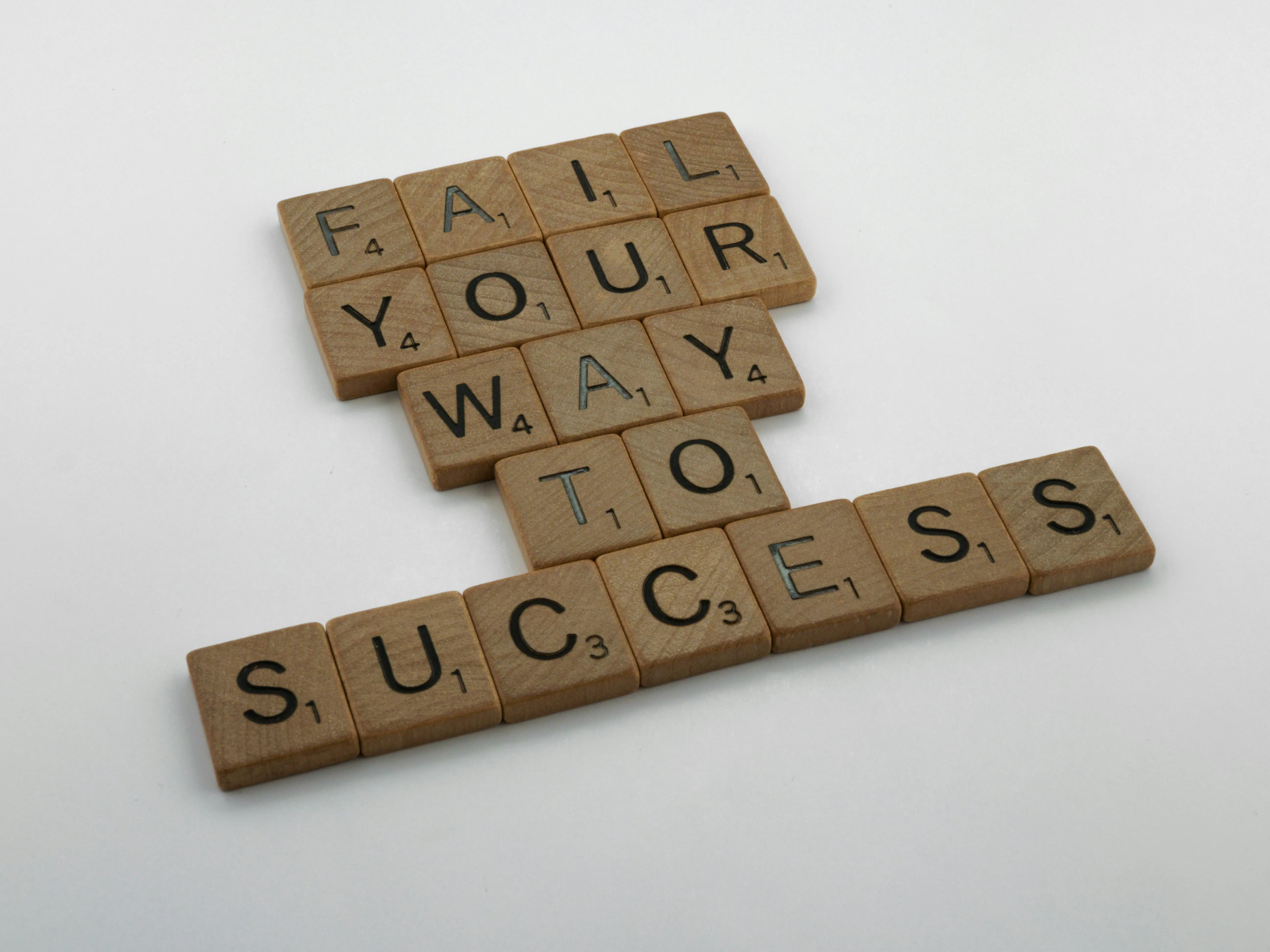
Failure Is the Engine, Not the Enemy
One of the most damaging messages students absorb from the achievement-oriented culture of high school is that failure is something to be avoided at all costs. The college admissions process reinforces this—every grade, every test score, every extracurricular is treated as permanent and consequential. By the time students graduate, many have internalized the belief that a misstep is a catastrophe.
The research says the opposite. Stanford psychologist Carol Dweck’s decades of work on growth mindset has demonstrated that individuals who view failure as a learning opportunity—rather than a reflection of fixed ability—consistently outperform those who avoid challenges to protect their self-image. In educational settings, students who were taught that struggle and mistakes cause the brain to form new, stronger neural connections showed measurable rebounds in academic performance during difficult transitions. The mechanism is straightforward: when you believe that difficulty is a sign of growth rather than inadequacy, you engage more deeply, persist longer, and ultimately learn more.
This principle does not stop at the classroom door. In career development, the willingness to try something and fail at it is what produces the self-knowledge that eventually leads to good decisions. The student who takes a pre-med track, realizes they hate organic chemistry, and switches to public health has not wasted two semesters. They have eliminated a path that would have made them miserable for decades and discovered something about themselves that no aptitude test could have revealed. That is not failure. That is progress operating under a different name.
The People You Admire Probably Didn’t Have It Figured Out Either
It is easy to look at successful people and assume they always had a plan. The reality is often the opposite. Ava DuVernay, one of the most acclaimed filmmakers working today, started her career in journalism, moved into public relations, and did not pick up a camera until she was thirty-two. Andy Weir, author of The Martian, wanted to be a writer but spent years as a software engineer because he needed to pay rent. He self-published his novel on his personal website as a hobby project. It became a bestseller and a major motion picture. Brandon Stanton was a bond trader in Chicago who lost his job in 2010 and, with no formal photography training, created Humans of New York—one of the most influential photography projects of the last decade.

None of these people had a straight line from intention to outcome. What they had was a willingness to move forward without certainty, to invest in what interested them even when the destination was unclear, and to treat setbacks as redirections rather than dead ends. Their stories are not anomalies. They are representative of how most meaningful careers actually develop: through iteration, not prophecy.
College Is Not the Only Valid Next Step—And That’s OK
Part of what makes the question What are you going to do after high school? so paralyzing is the unspoken assumption that the only acceptable answer is Go to college. A four-year degree is a powerful tool for many students, but it is not the right move for every student at every moment. For a student who does not yet know what they want to study, enrolling in a four-year university immediately can mean accumulating significant debt while wandering through a course catalog hoping something clicks.
There are alternatives that deserve more cultural respect than they currently receive. A gap year spent working, volunteering, or traveling gives a student real-world experience and time to develop preferences before committing tuition dollars. Community college allows students to explore academic interests at a fraction of the cost. Trade and vocational programs lead to well-paying, in-demand careers in fields like healthcare technology, skilled trades, and information systems—careers where the earning potential often rivals or exceeds that of four-year degree holders, particularly when student debt is factored in. Proper career assessment and career exploration tolls are a critical component in finding each student’s pathways. Combine that with a student who is willing to explore and incredible things can happen.
The important thing is not which path a student chooses first. The important thing is that the path involves forward motion, learning, and the accumulation of skills and self-knowledge. A student who spends a year working as an electrician’s apprentice and discovers they love the problem-solving nature of the work has gained something more valuable than a student who spent that same year in a lecture hall studying a subject they chose at random.
Flexibility Is the Skill That Outlasts Every Plan
The labor market of 2026 looks almost nothing like the labor market of 2006, and the labor market of 2046 will be equally unrecognizable. Automation, artificial intelligence, and shifts in the global economy are reshaping industries faster than any generation of workers has experienced. In this environment, the most valuable skill a young person can develop is not expertise in a specific field—it is the ability to adapt.
Adaptability is not an abstract personality trait. It is a practiced capability built through experience. Every time a student tries something new and learns from it, they are training their capacity to navigate unfamiliar situations. Every time they recover from a disappointment and find a new path forward, they are building resilience. Every time they change course based on new information about themselves or the world, they are exercising the same muscle that will carry them through layoffs, industry disruptions, relocations, and the countless other curveballs that a forty-year career will throw at them.
Research on career development in emerging adults, published in the Journal of Youth and Adolescence, found that young adults who experienced a variety of jobs and occupational roles during their transition years accumulated what the researchers called transferable capital—broader networks, more diverse skill sets, and greater adaptive capacity than peers who locked into a single track early. The students who explored did not fall behind. They built a wider foundation.
What to Do When You Don’t Know What to Do
If you are a student reading this, here is the practical takeaway: not knowing your career path is only a problem if you respond to the uncertainty by doing nothing. As long as you are moving, you are making progress. That movement can take many forms.
Use a career exploration tool. Take a career assessment quiz. Don’t go into it with the mindset of “time to choose my career”. Instead, view them as the career exploration that will help you build a career action plan. The plan that will get you to happy, successful outcomes regardless of what opportunities present themselves to you.
Start by paying attention to what energizes you rather than what impresses other people. The career that sustains you for decades will be one that aligns with your genuine interests, not one you chose because it sounded good at a dinner party. Take note of the moments when you lose track of time because you are engaged in something—those are signals worth following.
Seek out low-cost experiments. You do not need to commit four years and six figures to test a hypothesis about your future. Shadow someone in a job you find interesting. Take a single class. Volunteer for a weekend. Read a book written by someone in a field that intrigues you. Each of these small investments gives you information, and information is what turns uncertainty into direction.
Talk to people who are further down the road. Ask them not just what they do but how they got there. You will find that almost no one followed a straight line. Hearing real stories of real career paths will do more to ease your anxiety than any personality assessment or career quiz ever could.
And give yourself permission to change your mind. Changing direction is not starting over—it is building on everything you have already learned. The pre-med student who becomes a teacher did not waste their science education. They bring a depth of analytical thinking to their classroom that a pure education major might not have. The business major who pivots to graphic design did not throw away their degree. They understand markets, audiences, and strategy in a way that makes them a more effective creative professional. Nothing is wasted when you carry it forward with intention.
The Bottom Line
The question What do you want to do with your life? is not a question that needs to be answered at eighteen. It is a question you will answer and re-answer many times over the course of decades, and each answer will be more informed than the last. The students who understand this—who treat their early years as a laboratory rather than a performance—are not behind. In fact, in many ways those students are actually ahead. They are building something that the students with rigid five-year plans often lack: the adaptability, self-knowledge, and resilience to thrive no matter what comes next.
So if you do not know what you want to do, take a breath. You are not broken. You are not behind. You don’t need a career counselor or career coach, you need to start exploring with an open mind. Career exploration tools will help you, but doing this right is a deeply personal process. You are standing at the beginning of a process that works best when it is approached with curiosity, courage, and the understanding that every step forward—even the ones that feel like mistakes—is bringing you closer to the life that is actually yours.
Ready to take the next step?
Get personalized guidance for your career and college planning journey.